
Broken spring symptoms
A broken torsion or extension spring can leave the door stuck open, stop it partway, or make it slam shut. The contractor checks for a visible gap in the coil, loose cables, and a door that feels far heavier than normal.
Describe what's happening once and get connected with a local Oakland contractor who works on stuck garage doors, broken springs, and door safety checks.
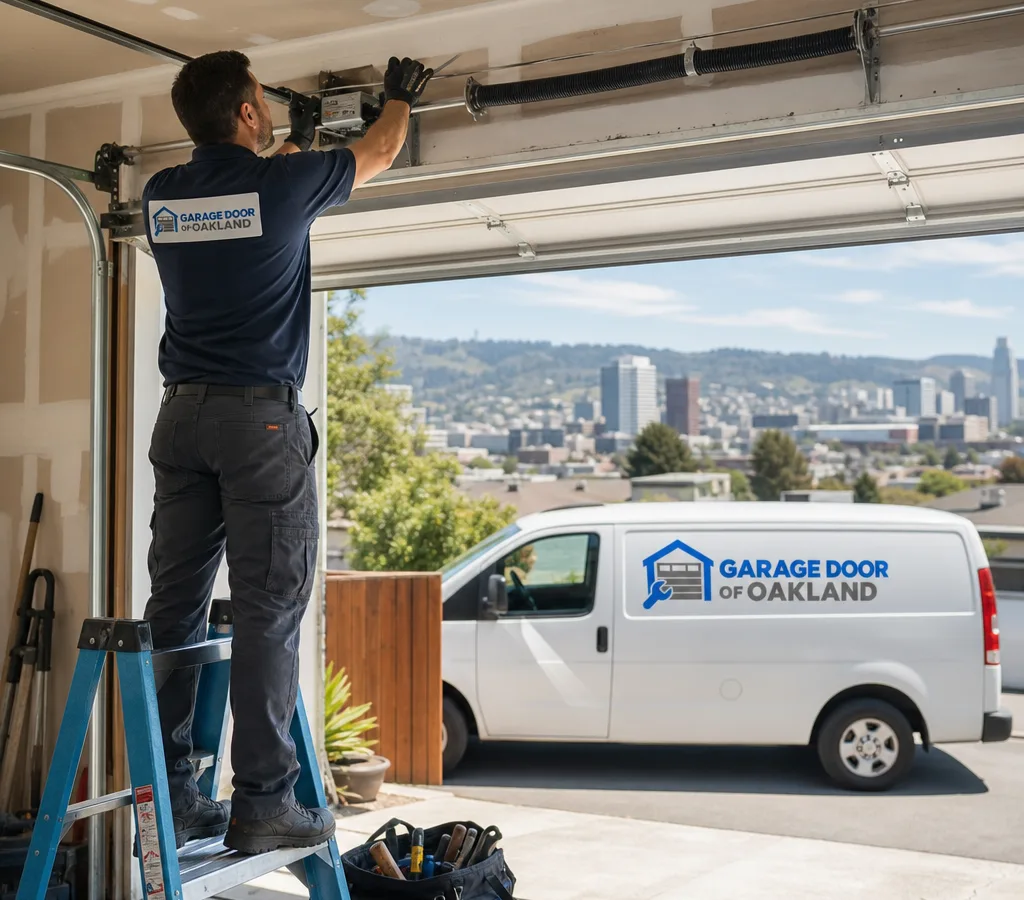
A garage door stuck open usually means the door system can't safely lift and lower its full weight the way it's designed to. In many Oakland homes, the garage is also a main entry, so an open door can turn into a security issue and a bigger headache fast.
Garage Door of Oakland is a referral service. Calls are answered around the clock, and your details are used to connect you with an independent local contractor who handles garage doors that are stuck open or stuck closed.
Before anyone touches the door, a good contractor will start with two priorities:
If you're standing in the driveway right now, avoid forcing the door down by hand. If the spring is broken, pushing the door can bend sections, pull cables off the drum, or damage the opener rail. If you need access in and out, a contractor may be able to secure the opening temporarily while the root problem is addressed.
Many homeowners start by describing the problem to a garage door repair contractor in Oakland so the right parts and tools can be planned for the first visit.
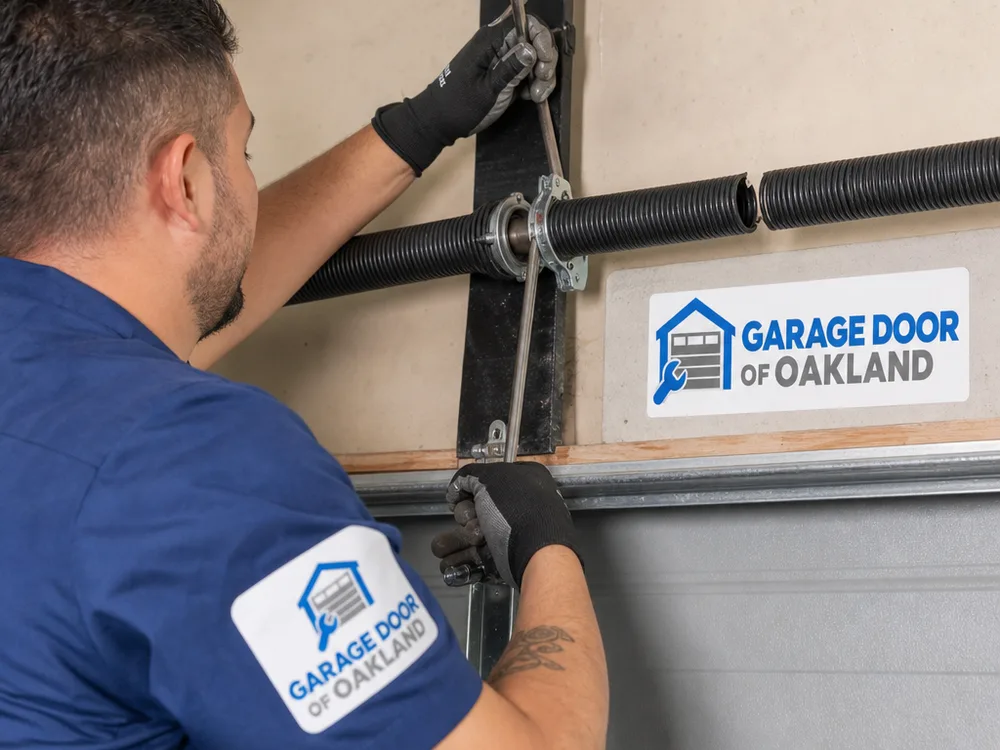
A broken torsion or extension spring can leave the door stuck open, stop it partway, or make it slam shut. The contractor checks for a visible gap in the coil, loose cables, and a door that feels far heavier than normal.
If a lift cable has slipped off the drum or frayed, the door can rack to one side and bind in the tracks. The contractor checks drums, end bearings, track alignment, and roller condition before cycling the door.
A door can refuse to close if photo-eyes are blocked or misaligned, or if the opener's force and travel settings are off. The contractor verifies the door moves freely by hand first, then evaluates the opener.
Bent hinges, cracked struts, or a damaged section can cause binding that looks like an opener issue. The contractor looks for pinch points, bowed panels, and hardware that has pulled from the door skin.
If the trolley is disengaged or the emergency release is pulled, the door may drift, jam, or fail to latch. The contractor checks the release, any manual slide lock, and how the door balances.
Share whether the garage door is stuck open or stuck closed, if you heard a bang, if the opener hums, and whether the door looks crooked in the opening.
Garage Door of Oakland routes your call to an independent contractor who works on this type of garage door repair in Oakland and nearby neighborhoods.
The contractor typically checks door balance, spring condition, cable routing, track alignment, roller wear, and the opener's safety inputs before recommending a fix.
The contractor explains the likely cause, what needs to be adjusted or replaced, and available options. You choose how to proceed.
One phone call starts the connection with a local contractor.
If you need around-the-clock garage door repair for a door that won't close, a local contractor can take over troubleshooting and work to make the door safe to operate again.
CALL NOW: (510) 338-9676
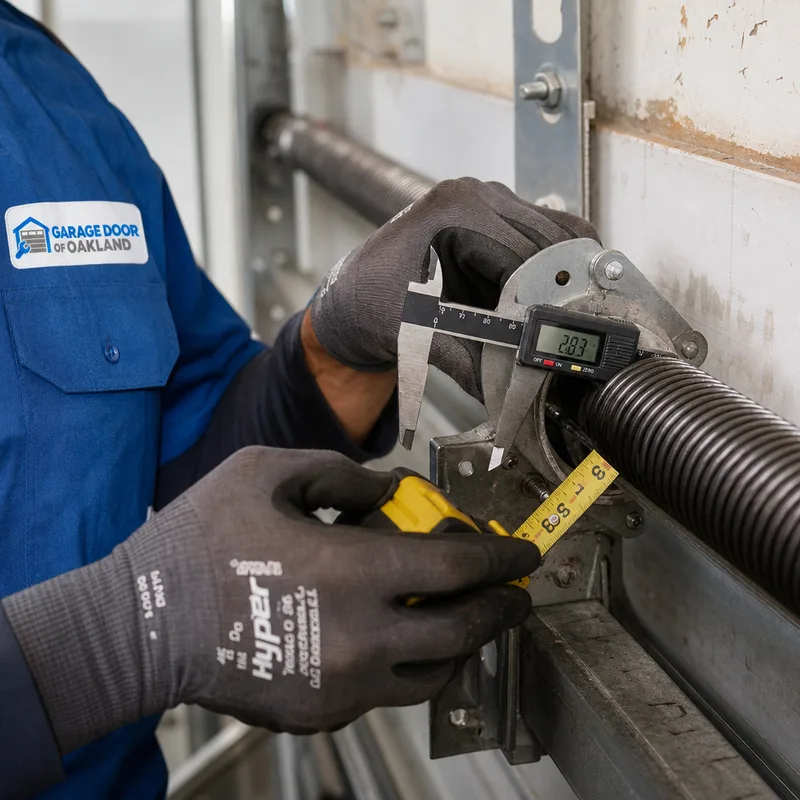
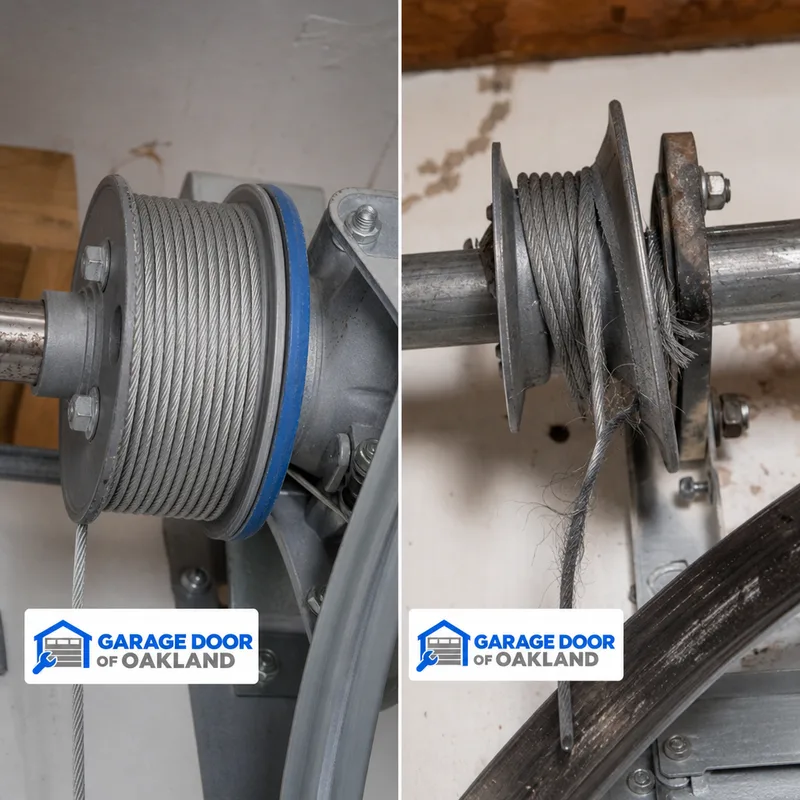
The most common causes are a broken spring, a cable problem, or a door that is binding in the tracks. A contractor will usually confirm whether the door is properly counterbalanced first, because spring and cable failures change the door's weight and can make operation unsafe.
A loud bang from the garage, a visible gap in the torsion spring above the door, or a door that suddenly feels extremely heavy are strong signs of a broken spring. If any of those are true, avoid trying to force the door and tell the contractor what you noticed so they can plan for spring replacement and safe handling.
The root causes overlap, but the symptoms can change: a broken spring can leave the door stuck closed, and a jammed roller or track obstruction can keep it from lifting. When you call, say whether the opener strains, whether the door lifts at all by hand, and whether one side is lagging behind the other.
It can be risky if the door is not supported by intact springs and cables, because the door may drop or move unexpectedly once it's disconnected from the opener. If you already pulled it, tell the contractor whether the door stayed in place, drifted down, or slammed shut.
The most helpful details are door type, spring type if you can see it, whether the door is crooked, and what the opener does when you press the button. In Oakland, also mention if the garage is the main entry or if you need the opening secured for the night, since that can change the immediate priorities.
It often points to a disconnected trolley, a broken spring that left the opener unable to lift the door, or a stripped internal gear depending on the opener type. A contractor typically checks door balance manually before making any opener adjustments, because an opener isn't meant to compensate for a heavy, unbalanced door.
On a two-spring torsion system, the contractor may recommend replacing both because they share the work and typically wear at a similar rate. Your contractor can explain what they see on your setup and what option makes sense for reliable balance and smoother travel.
It usually depends on what failed and what parts your door requires, such as the correct spring size, cable length, or specific rollers. The best way to avoid delays is to describe the door size, whether a spring is visibly broken, and any unusual hardware so the contractor has the right materials when they arrive.
Explain whether the garage door is stuck open or stuck closed, what you heard, and what the opener is doing. Garage Door of Oakland will connect you with a local contractor who can diagnose the cause and walk you through the repair options.