
Worn or seized rollers
Rollers can develop flat spots, cracked wheels, or seized bearings. That drag can pull the door sideways in the track until it binds or pops out.
Describe what the door is doing once and we'll connect you with a local Oakland-area contractor who handles off-track doors, rollers, tracks, and lift cables.
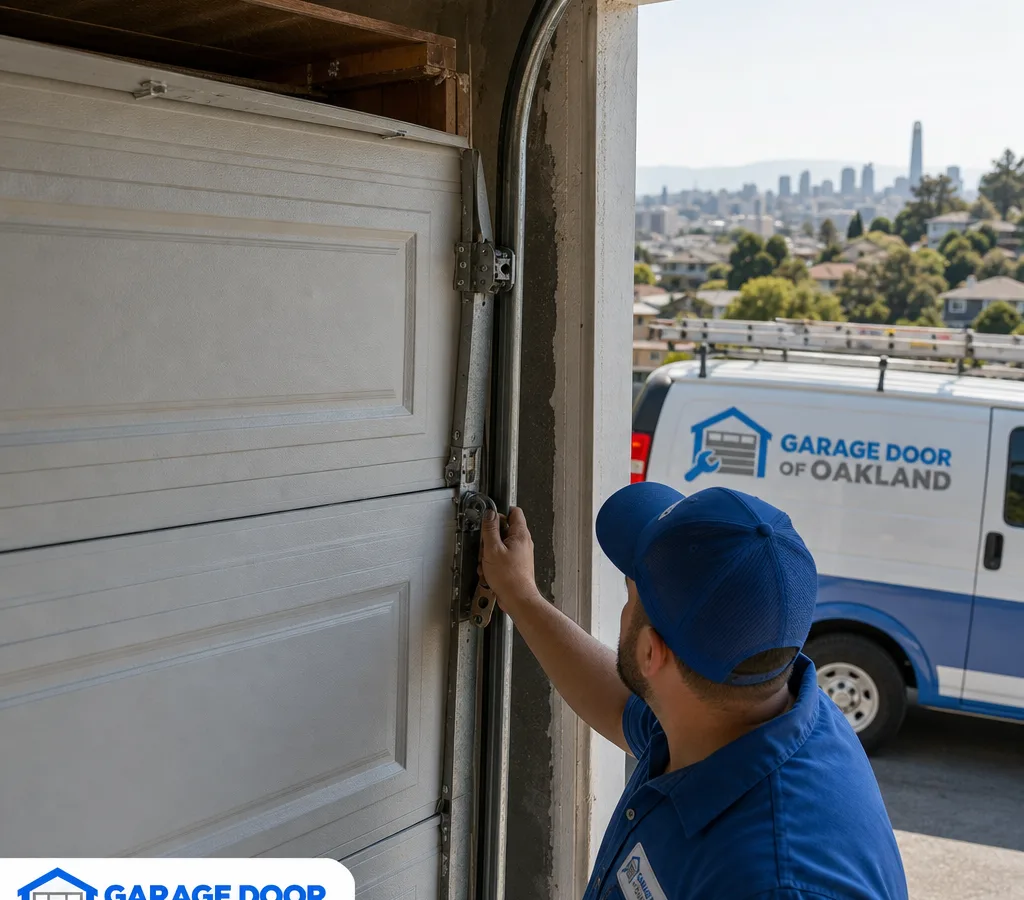
Garage door roller repair usually starts with a basic question: did a roller fail, or did something else force the roller out of the track?
A sectional garage door rides on rollers that run inside vertical and horizontal tracks. If a roller is cracked, seized, worn flat, or pulled out of the hinge, the door can wobble, grind, or jump the track. But the underlying cause is often in the track alignment, the door being out of square, a loose hinge, or a lift issue on one side.
When you call Garage Door of Oakland, we take the details and connect you with a local contractor who works on these problems in Oakland homes. The contractor can then inspect the door system as a whole and recommend the right fix.
Typical work that falls under garage door roller repair includes:
If you're dealing with a broader issue like a door that won't open, reverses, or makes unusual sounds, a general garage door repair diagnosis may be the right starting point. This page focuses on roller, track, off-track, and lift cable problems.
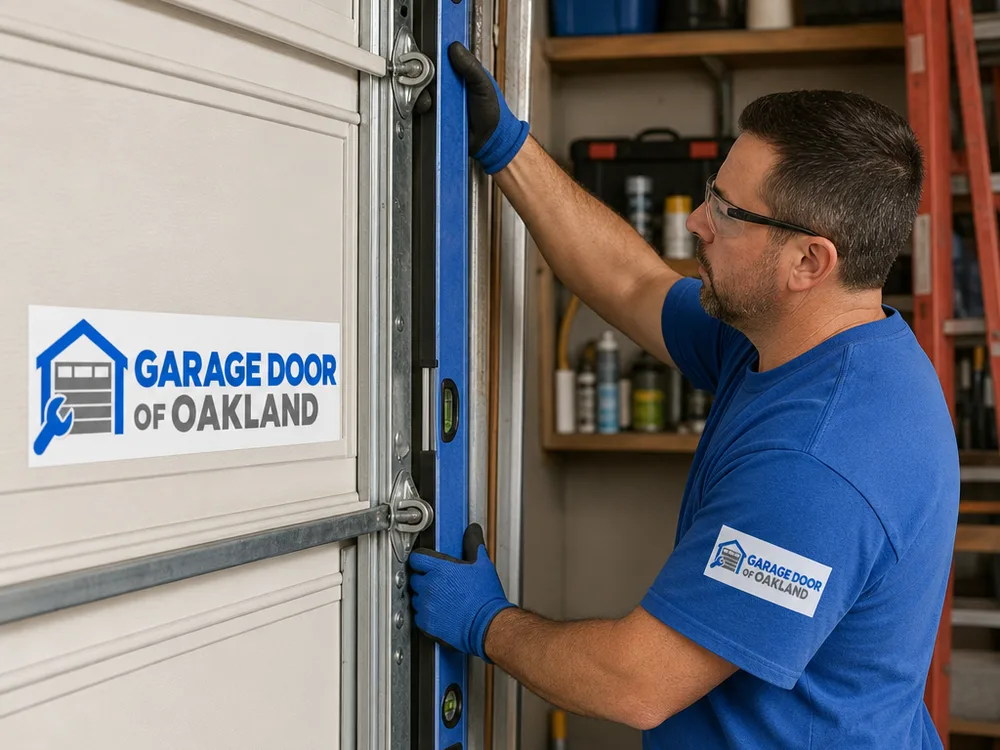
Rollers can develop flat spots, cracked wheels, or seized bearings. That drag can pull the door sideways in the track until it binds or pops out.
A bump from stored items, a minor vehicle tap, or loose mounting brackets can shift the vertical track. Even a small change can make the door ride rough and start climbing the track edge.
Once a track is bent, rollers stop rolling smoothly and begin scraping. Bent garage door track repair usually means reshaping or replacing the damaged section and then resetting clearances.
A broken garage door cable can let one side of the door drop. The door may hang crooked, wedge in the opening, or pull rollers out of the track on the low side.
Loose hinges, missing fasteners, or worn end bearing plates can let the door rack as it moves. Contractors typically check these items before recommending roller replacement.
Tell us whether the door is stuck, leaning to one side, dragging, or has a visible cable issue. Mention anything you heard—a bang, grinding, or popping—and whether the opener is still trying to lift.
Instead of calling around, you explain the situation once and get routed to a contractor who handles garage door off-track repair and roller or track issues in the Oakland area.
A good first check is track plumb, bracket tightness, roller condition, hinge play, and whether the door is lifting evenly. If a cable is involved, the drums and bottom brackets are inspected as well.
After the roller, track, or cable work is completed, the door is cycled by hand first, then with the opener, to confirm smooth travel and that the door stays seated in the track.
Stop running the opener if the door is crooked or off track.
If a roller is out of the track or a cable looks loose, describe what you see once. We'll connect you with a local contractor who can take it from there.
CALL NOW: (510) 338-9676
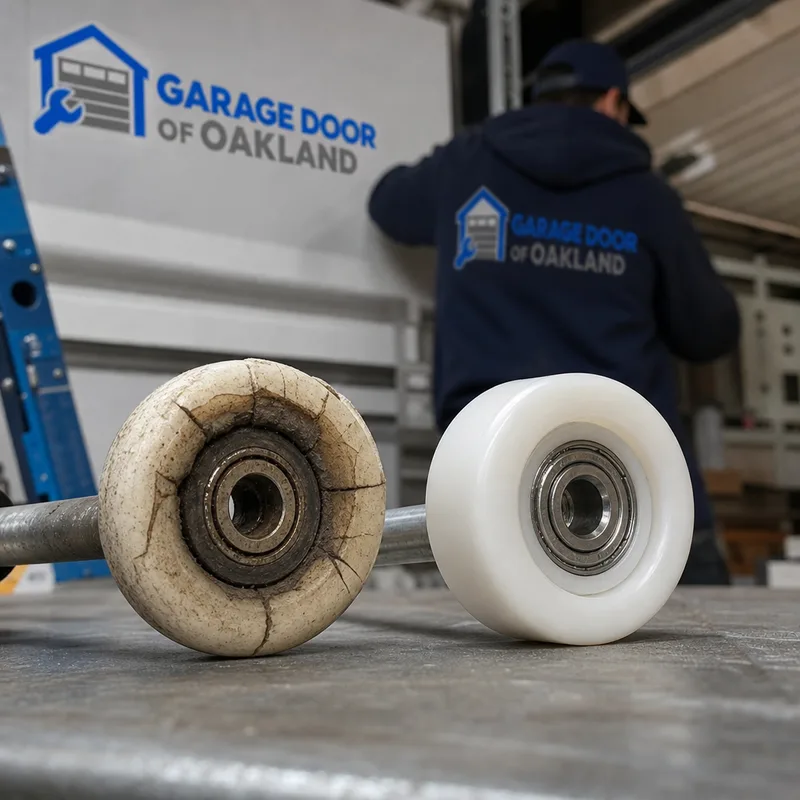
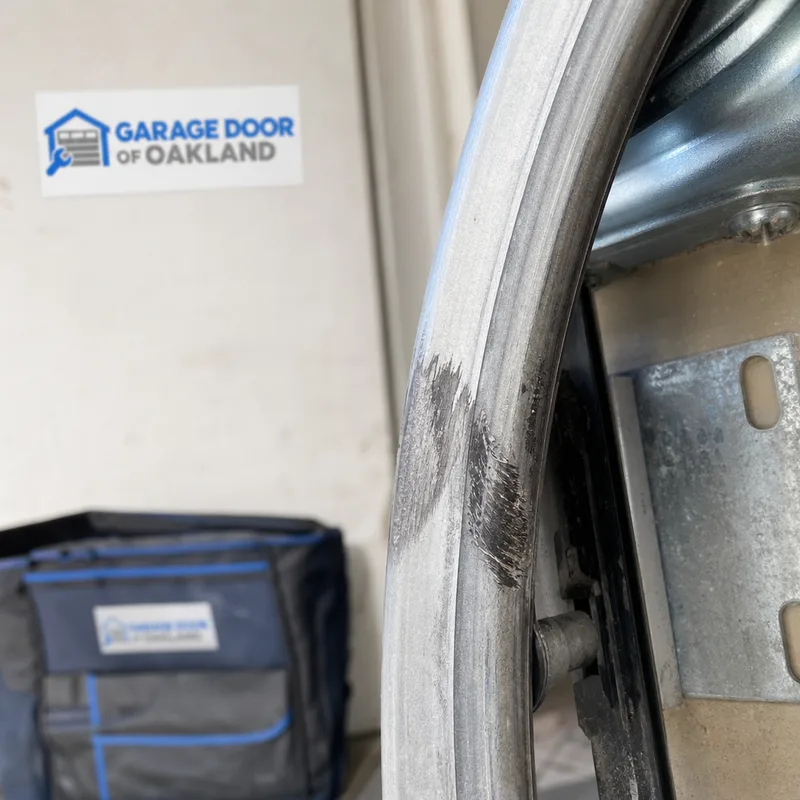
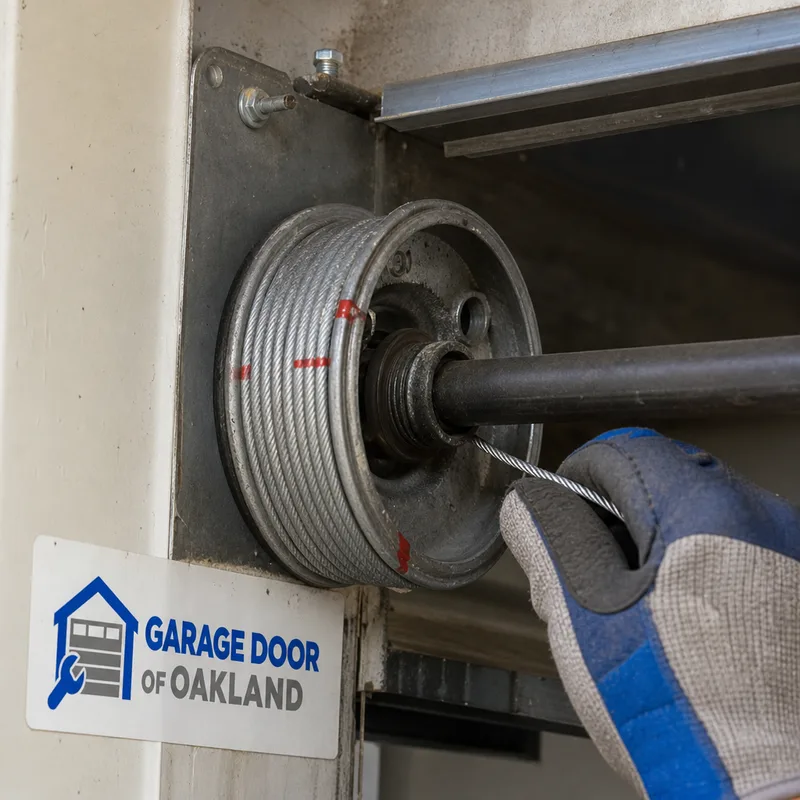
If the door wobbles, shakes, or binds in one spot, the contractor will usually check rollers and track together before picking a fix. A roller problem often shows up as a rough, gritty wheel, a roller that doesn't spin freely, or a roller stem that's loose in the hinge. A track problem often shows up as a visible bend, widened track opening, rubbing marks on the track edge, or brackets that have shifted so the track is no longer straight.
Stop using the opener and avoid forcing the door, because that can bend the track further or damage hinges and panels. Garage door off-track repair typically involves re-seating the rollers, correcting the track alignment, and then checking for the reason it came out in the first place, such as a damaged roller, a loose bracket, or a lift cable issue on one side.
No, a broken garage door cable and a spring problem can happen independently, but they can also be related. Cables can fray from wear, misalignment on the drum, or hardware issues near the bottom bracket. The contractor will look at the cable path, the drums, and how evenly the door lifts to decide whether the cable is the primary failure or a symptom of another problem.
Bent garage door track repair starts with confirming where the track is deformed and whether the mounting brackets moved. The contractor typically checks that the vertical tracks are plumb, the horizontal tracks are properly supported, the track spacing is correct for the door thickness, and that rollers are not damaged from riding against a bent section.
A crooked door often points to a lift imbalance, and a cable issue is a common cause, but it isn't the only one. A jammed roller, a bent track on one side, or hinge damage can also rack the door. Garage door cable repair in Oakland calls often start with checking whether the cable is off the drum or has broken strands, then verifying the tracks and rollers so the door doesn't pull sideways again.
A clear description of what the door is doing is the most helpful: whether it's stuck open or closed, leaning to one side, or making grinding noises. If you can do so safely, note which side looks lower, whether you see a roller outside the track, and whether a cable is visibly loose near the top drum or hanging near the bottom bracket. With that, we can connect you with a contractor who is set up for garage door track repair in Oakland and nearby neighborhoods.
You explain the problem once on the phone, and we connect you with a local contractor who handles roller, track, and cable work. You speak to the contractor directly about inspection findings, options, scheduling, and the final scope, and you decide whether to move forward.
If you're seeing a roller out of the track, a bent section of track, or a cable that looks loose or broken, describe what's going on once. We'll connect you with a local contractor who can inspect the rollers, tracks, and lift cables and explain the next step.