
Door won't open or closes halfway
Common causes include a broken spring, a door that is out of balance, blocked photo-eyes, or travel and force settings that need adjustment after parts wear.
Describe the problem once and get connected with a local Oakland contractor who works on garage doors, openers, springs, rollers, and track alignment.
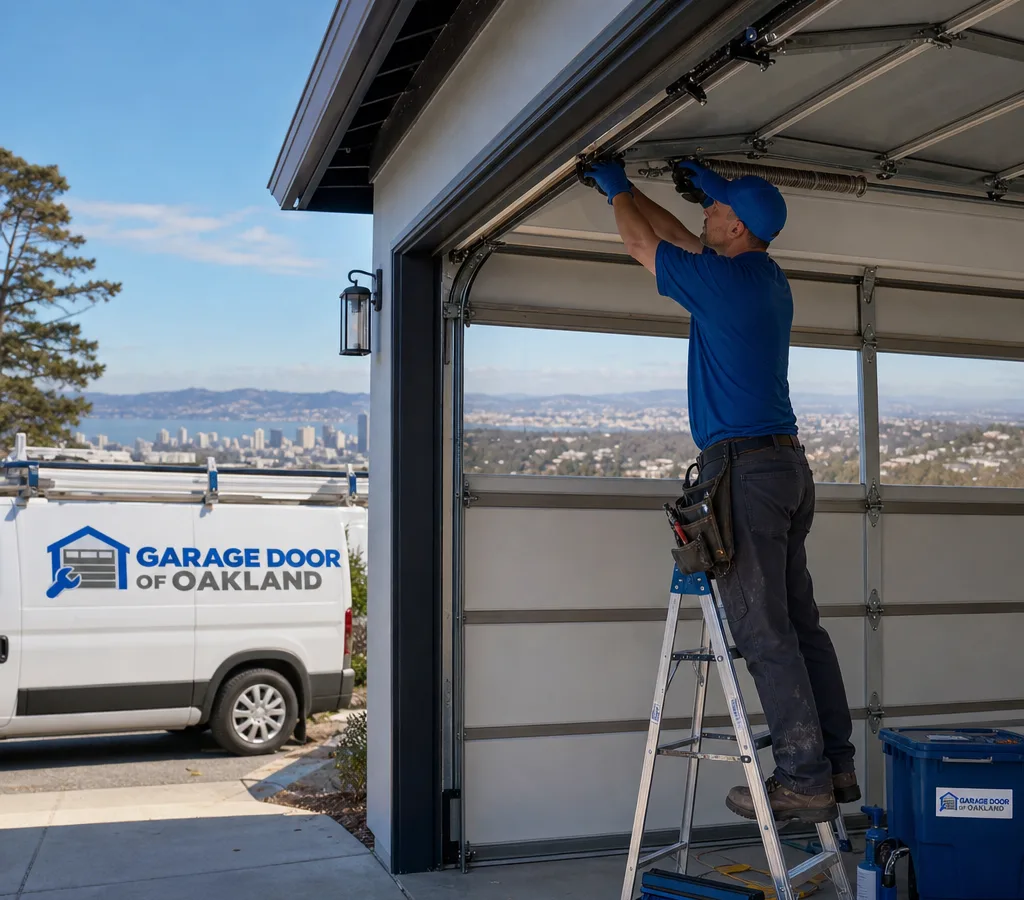
If you searched for garage door Oakland CA, you probably have a door that will not open, is crooked in the opening, is loud, or feels heavy. A garage door system is a balance of panels, hinges, rollers, vertical and horizontal tracks, and a counterbalance system—torsion springs over the door or extension springs along the tracks. When one part is off, the door can bind, jump a roller, or strain the opener.
A local contractor usually starts with a safety and function check:
Oakland homes range from older detached garages to newer townhome-style builds, so contractors see narrow wood-framed openings as well as modern steel sectional doors with low-headroom track. In denser areas such as Temescal or Rockridge, tight driveways and street parking can affect how work is staged. In the Oakland hills, driveway slope and wind exposure can make small alignment issues show up as a door that wants to drift or slam.
When you call Garage Door of Oakland, you describe what the door is doing and any details you know—manual versus opener, single versus double door, and recent noises—and we connect you with a local contractor who handles Oakland garage doors work directly.
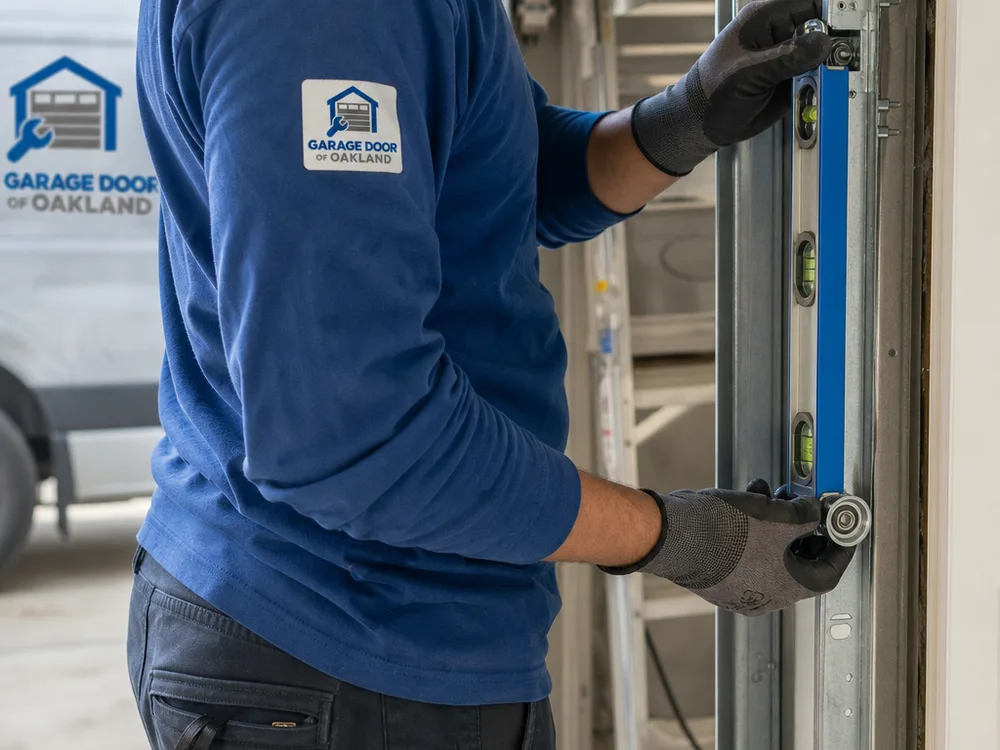
Common causes include a broken spring, a door that is out of balance, blocked photo-eyes, or travel and force settings that need adjustment after parts wear.
Springs store a lot of energy. A contractor will identify torsion versus extension systems, confirm correct sizing, and restore proper balance so the opener is not doing the lifting.
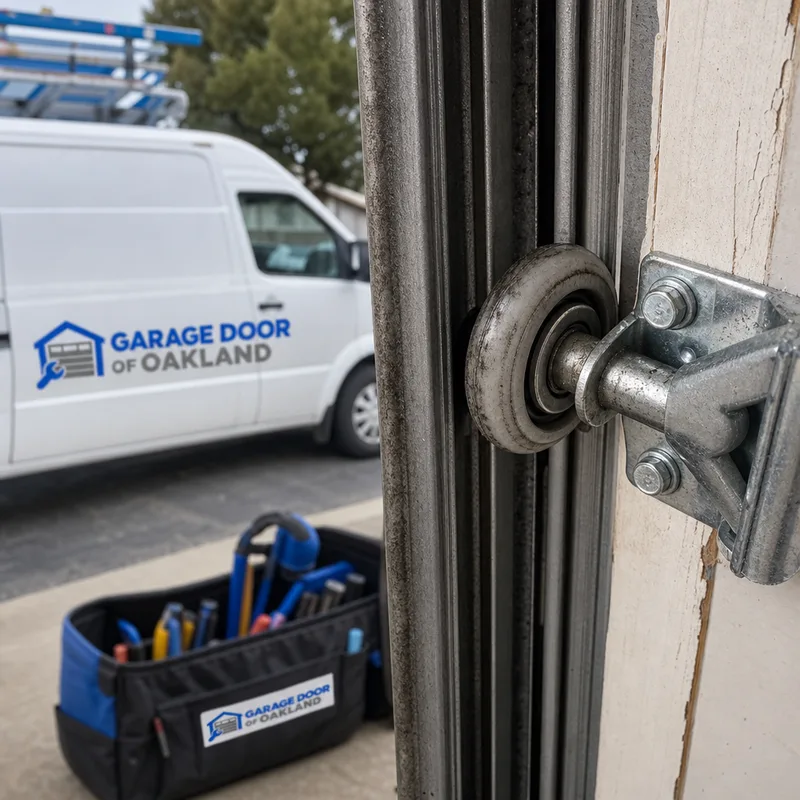
Noisy or jerky movement can come from worn rollers, loose hinge screws, cracked hinges, or dry bearing points. Hardware inspection usually reveals what is causing the sound.
A door that is racked in the opening can be caused by track movement, cable issues, or a shifted mounting point. The fix depends on what moved and why.
Contractors troubleshoot remotes and wall controls, photo-eyes, sprockets and chains or belts, limits, and force settings, then confirm the door itself is mechanically sound.
When panels are bent, rotted, or repeatedly failing at hinges, replacement can make sense. A contractor can match the opening, headroom, and desired insulation level to a door that fits the garage.
Share what you see and hear: does the opener run but the door stay put, is there a gap in the spring, is a cable off the drum, or is the door stuck on one side?
Garage Door of Oakland routes your request to an independent contractor serving Oakland who works on garage doors and openers.
You speak directly with the contractor about the likely cause, what needs to be inspected on-site, and the repair or replacement paths for your specific door.
If the plan and terms work for you, you can schedule the next steps with the contractor. If not, you are not locked into anything.
Describe the symptoms once.
If your door is jammed, loud, or off track, get connected with a local garage door contractor in Oakland who can take it from there.
CALL NOW: (510) 338-9676
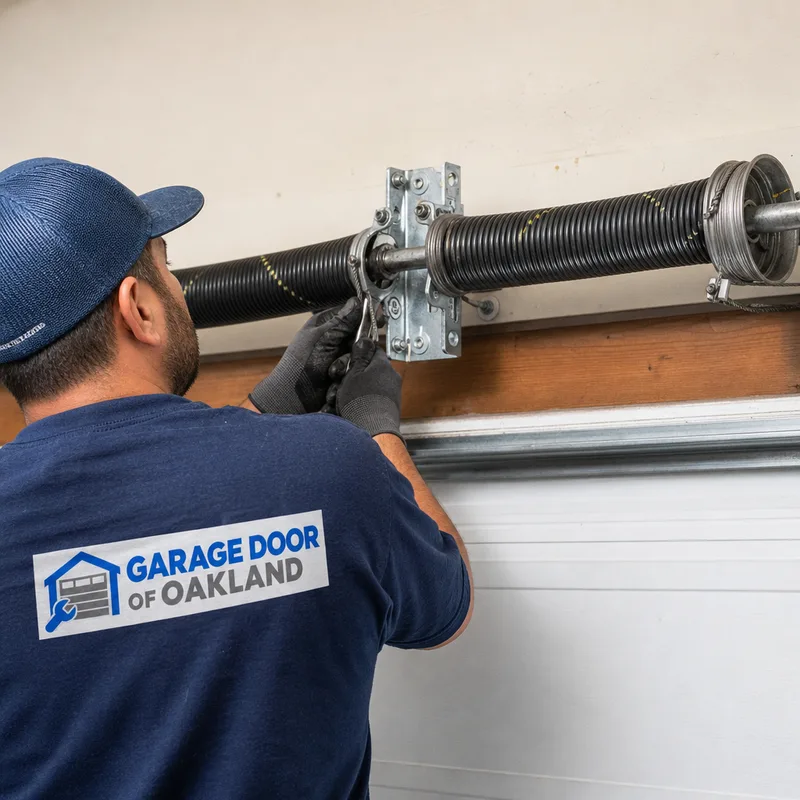
A broken torsion spring often shows a visible gap in the coil above the door, and the door suddenly feels very heavy when lifted by hand. If the opener runs but the door barely moves—or lifts a few inches and stops—stop trying to force it and describe what you see when you call so the contractor comes prepared.
An off-track door can pinch, bind, and drop unexpectedly, so it is safest to avoid operating it until it is inspected. Tell the contractor whether a roller is out of the track, whether a cable is loose, and whether the door is stuck open or closed; those details affect the approach and the parts likely needed.
Reversing near the floor is commonly tied to photo-eye alignment, sensor wiring, or an opener force setting that is reacting to resistance. Resistance is often caused by track misalignment, worn rollers, or a door that is out of balance, so a good inspection checks the door hardware first and then the opener settings.
Loud, shaky operation is often a door hardware issue, not the motor itself. Worn rollers, loose hinges, and track movement can transmit vibration that sounds like an opener problem, so contractors typically test the door manually with the opener disengaged to isolate the source.
Replacement is commonly discussed when sections are bent, rotted, or repeatedly failing at hinge points, or when the door no longer fits the opening squarely. The contractor will also look at headroom, track type, and insulation needs because those constraints control which new door options work for the garage.
Start with the basics: door size, material, opener type if you know it, and what changed recently, such as a bang, scraping, a power outage, or an impact. A photo of the door, spring area, and tracks can also help the contractor understand the likely issue before arriving.
You speak directly with the local contractor who takes the job. Garage Door of Oakland answers the call, gathers the details once, and then connects you to an independent contractor serving the Oakland area.
Yes. Many garage door calls involve repairs such as springs, rollers, cables, track alignment, or opener adjustments rather than a full door change. If replacement is the better path, the contractor can explain why after inspecting the door.
Describe what the door is doing, what you've already tried, and whether it is stuck open or closed. We'll connect you with a local contractor who handles garage doors in Oakland, and you can decide what to do after you speak with them. If you already know you need garage door repair in Oakland, CA, mention the symptoms and any safety concerns when you call.